

How Craft brought focus and discipline to high-utilisation charter operations
Top 1 priority
Sales teams know exactly where to focus first
Minutes, not hours
Agents start the day effective immediately
100% of inbound ranked
Every opportunity is prioritised before action
“Building good software is hard, especially when it has to reflect how people actually work, not how tools assume they work.”
— Israel Slodowitz, Founder and CEO at Craft
Ready to see Hamilton in action?

Company Name
Craft
Industry
Private Aviation
Company Size
Enterprise
Pain Point
Knowing which opportunity to focus on and when.
Hamilton AI Products Used
Ticketing
Inbound
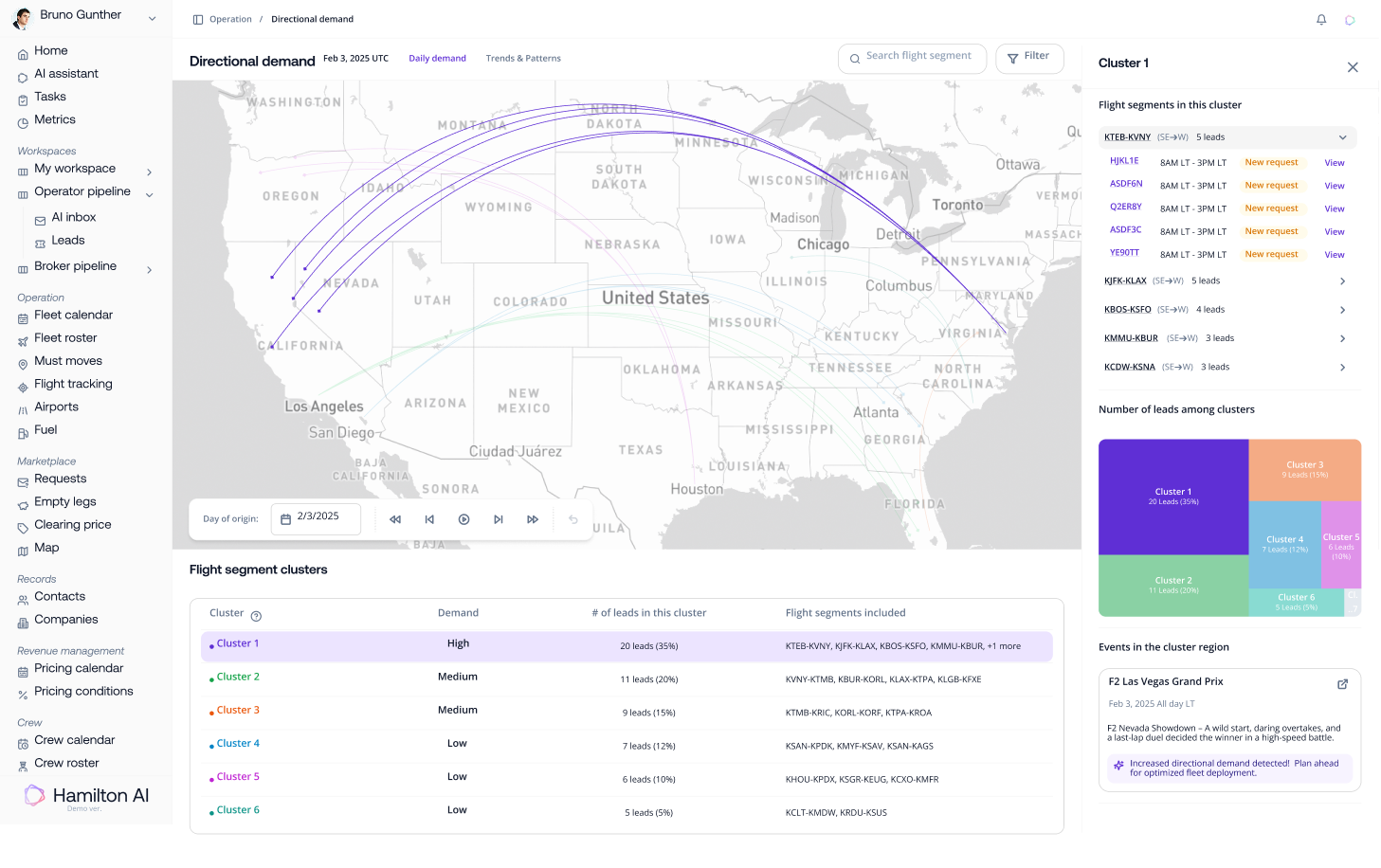
Demand Intel
Pricing Rules
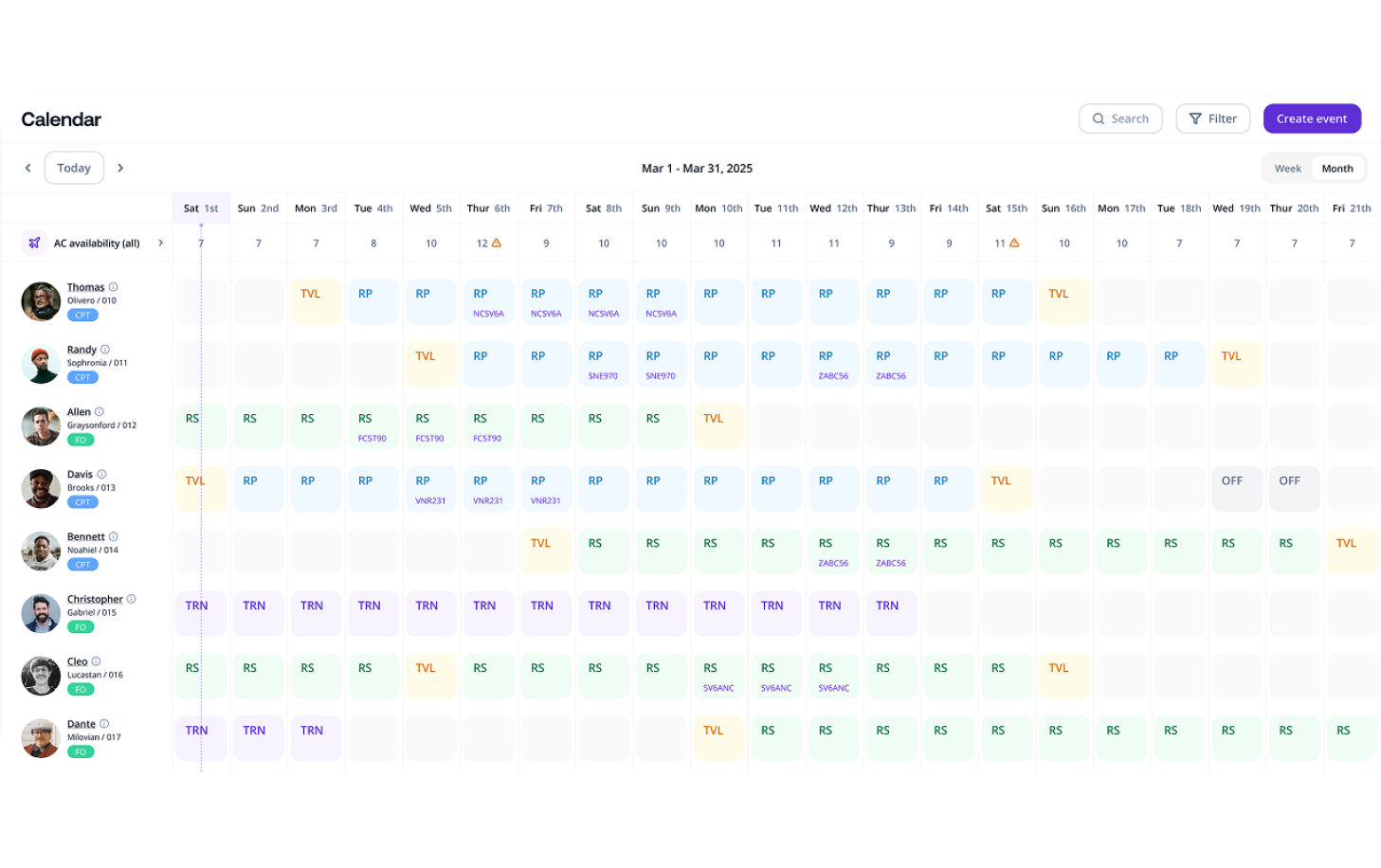
Calendar
Aircraft Tracking
Craft was built for intensity.
Founded by Israel Slodowitz, the company operates premium aircraft at utilisation levels far above industry norms, flying up to 1,500 hours per year, compared to the 200–400 hours typical of most operators.
From the beginning, Craft positioned itself differently. It wasn’t built around occasional charter or passive ownership. It was built for volume, speed, and precision, serving brokers, deploying assets aggressively, and running a business where every decision compounds.
But as demand scaled, so did the operational pressure.

When demand isn’t the issue, prioritisation is
From day one, Craft faced a challenge that many high-utilisation operators know too well.
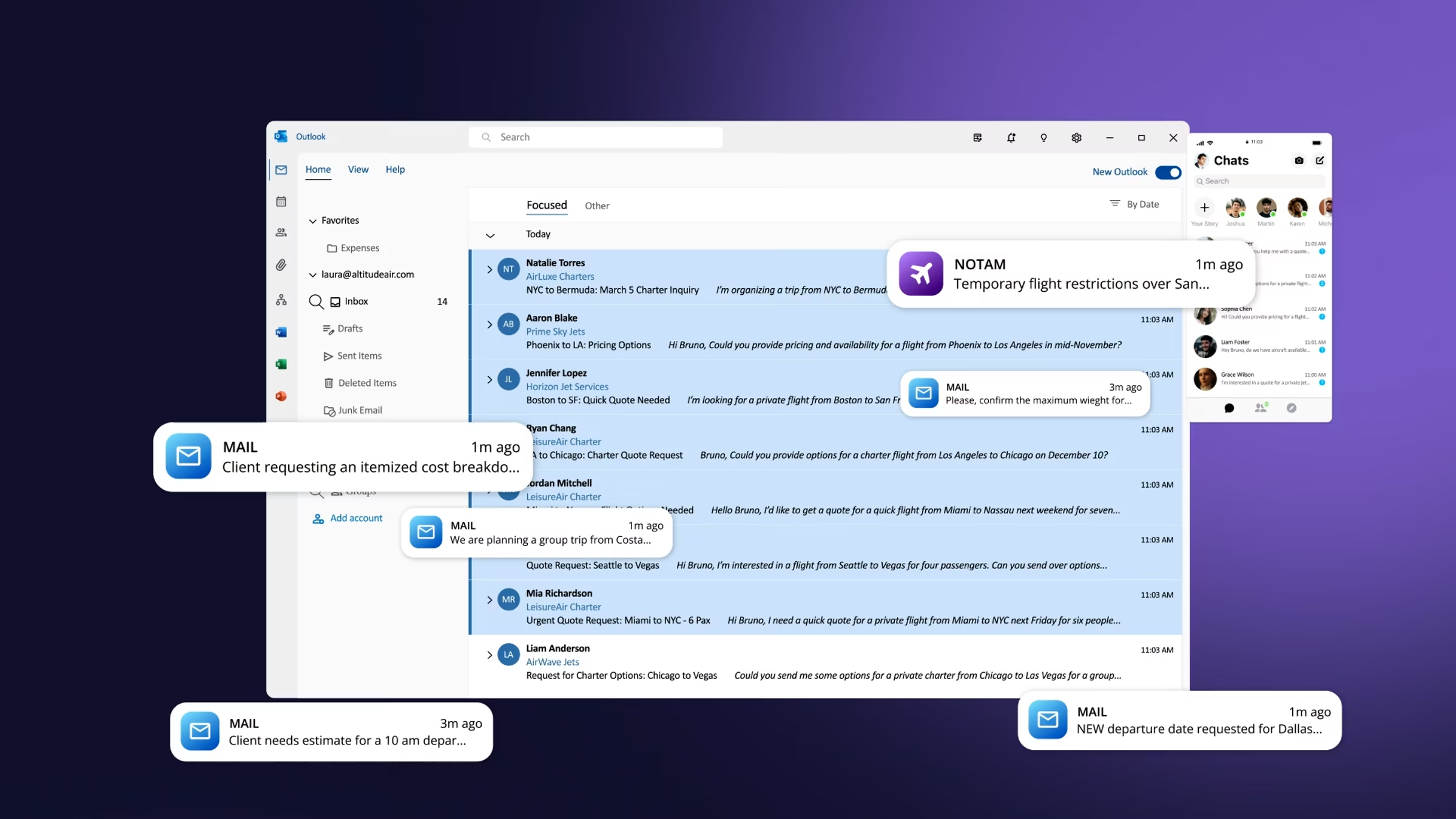
Inbound requests came in by the hundreds, every single day, through emails, text messages, phone calls, and industry platforms. There was no shortage of demand. The real issue was making sense of it.
“We were getting literally hundreds of requests a day,” Israel explains. “And we had no real way to sort them, prioritise them, or understand which trips were actually worth pursuing.”
At the same time, Craft was operating under hard constraints:
- A finite number of aircraft
- A finite number of pilots
Every missed opportunity mattered. Every mispriced trip mattered. And every manual decision introduced inconsistency.
Pricing, in particular, became a pain point:
- Two agents could quote two different prices for the same trip
- Demand patterns (Friday vs Tuesday, peak vs off-peak) weren’t systematically reflected
- Too much judgment lived in people’s heads instead of in the system
For a premium operator, this wasn’t just inefficient, it was unsustainable.

Replacing inbox chaos with a system that thinks in priorities
Craft didn’t ignore the problem. In fact, Israel went further than most.
Before Hamilton, the company:
- Adopted enterprise-grade ticketing and analytics tools
- Built custom internal workflows
- Hired engineers and product managers
- Even attempted to build proprietary software in-house
The lesson came at a cost:
Building software is easy. Building great software is incredibly hard.
“Once you can actually see demand patterns forming, everything changes; pricing, planning, even how confident you feel making decisions.”
— Israel Slodowitz, Founder and CEO at Craft
Despite the investment, the tools never fully solved the problem holistically. Development was slow. Features were fragmented. And existing aviation software vendors consistently failed to adapt to Craft’s high-utilisation reality.
Hamilton entered through a trusted investor introduction, and immediately stood out.
Instead of asking Craft to adapt its business to rigid software, Hamilton adapted to Craft’s operational reality:
- High volume
- High utilisation
- Constant prioritisation decisions
- Zero margin for missed opportunities
Craft made a decisive move:
They stopped internal development and put all their chips on Hamilton, becoming one of its earliest customers and actively shaping the product.

Replacing inbox chaos with a system that thinks in priorities
Before Hamilton, inbound demand lived in what Israel describes as a junk box. If one salesperson was out, others scrambled to keep up. Time was spent cleaning inboxes instead of making decisions.
Today, the workflow looks very different. Instead of reacting to volume, Hamilton:
- Surfaces the few opportunities that actually matter
- Prioritises trips based on real operational value
- Eliminates guesswork from pricing and selection
- Reduces inconsistency between agents

Software built for operators who actually fly
Craft didn’t lack software. In fact, Israel had spent years testing, adapting, and even building tools internally to manage charter demand.
The problem wasn’t effort, it was fit.
Most aviation software, Israel explains, is built around low utilisation. Aircraft flying 200 to 400 hours a year. Occasional charter. Passive ownership. That model simply doesn’t work when aircraft are flying 1,500 hours a year and every decision affects availability, pricing, and margin.
“We were in this middle ground, too big for basic tools, too specialised for generic platforms.”
— Israel Slodowitz, Founder and CEO at Craft
What made Hamilton different wasn’t a single feature. It was intent.
From the beginning, Hamilton was designed for:
- High-volume inbound demand
- Constant prioritisation decisions
- Operators deploying limited assets at scale
- Speed of execution over rigid roadmaps
Just as importantly, the relationship felt different.
Where other vendors put requests on a waitlist, Hamilton moved quickly, sometimes testing ideas within days. Israel describes throwing out concepts casually and seeing working versions appear almost immediately.

Ready to see Hamilton in action?
CUSTOMER STORIES
Other Stories