Private aviation has spent the last decade digitizing operations.
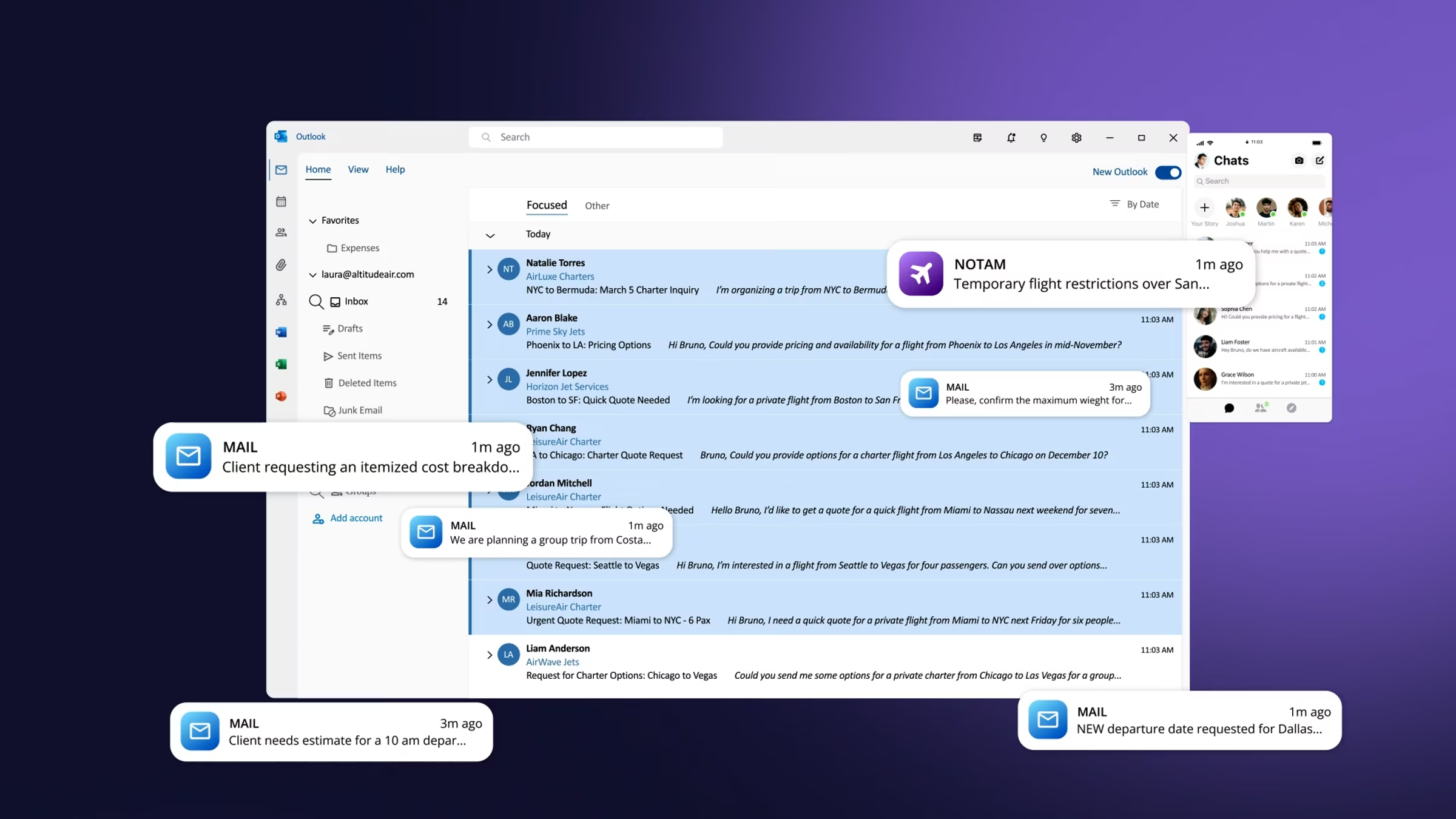
Charter requests moved out of email and into CRMs. Dispatch became more automated. Quoting became faster. Fleet management became more connected.
Yet one critical part of the workflow has remained largely untouched: banking.
Even today, the financial side of a charter operation often lives outside the platform that manages the trip. Payments are tracked in separate systems. Wire transfers are verified manually. Finance teams switch between banking portals, accounting software and spreadsheets just to understand whether a flight is financially ready to depart.
That is beginning to change.
A new generation of software is bringing banking directly into operational platforms—a model known as embedded banking.
For private aviation, that shift has the potential to change far more than how payments are received. It changes how operators manage cash, control spending, reconcile flights and understand profitability.
What Is Embedded Banking?
Embedded banking is the integration of banking services directly into the software businesses use every day.
Instead of logging into a separate banking portal to check incoming wires or move funds, users can perform those actions inside the platform where the work is already happening.
Across industries, embedded banking is transforming sectors such as logistics, e-commerce and SaaS by removing unnecessary context switching and reducing manual financial processes.
For private aviation, the opportunity is even greater because every trip generates a complex chain of financial events.
A single charter booking may involve:
- Customer deposits
- Card payments
- Wire transfers
- Authorization holds
- Fuel purchases
- Landing fees
- Crew expenses
- Final invoicing
- Revenue recognition
- Financial reconciliation
Traditionally, these activities happen across multiple disconnected systems.
Embedded banking brings them into one operational workflow.
Why Banking Shouldn't Live Outside Operations
Most banking platforms are designed to answer financial questions.
- Has the payment arrived?
- What is the account balance?
- Which transactions occurred today?
Those are important questions.
But operational teams often need different answers.
- Has this customer paid for today's flight?
- Can dispatch safely release the aircraft?
- Which trip generated this incoming wire?
- Which invoice does this payment settle?
- Has this flight already been reconciled?
A traditional bank cannot answer those questions because it doesn't understand the operational context behind each transaction.
That missing context is often where finance teams spend most of their time.
Instead of making decisions, they spend hours matching transactions to flights, invoices and customers after the fact.
From Banking Data To Operational Intelligence
Embedded banking becomes significantly more valuable when it understands the business that surrounds every transaction.
In private aviation, an incoming payment isn't just an incoming payment.
It belongs to:
- A specific trip
- A specific aircraft
- A specific customer
- A broker or charter operator
- An invoice
- A sales representative
- An operating entity
When banking is connected to operational data, every financial event automatically gains context.
Rather than seeing a $50,000 wire transfer, finance teams see a completed payment for a specific flight, linked to the customer, aircraft, invoice and current reconciliation status.
That context dramatically reduces manual work while improving visibility across finance and operations.
Beyond Payments: Building A Financial Workflow
One common misconception is that embedded banking is simply another way to accept payments.
In reality, payments are only one step in a much larger financial workflow.
Modern financial platforms increasingly combine several capabilities into a single experience:
- Payment processing
- Banking
- Company spending
- Cash visibility
- Financial reconciliation
When these functions share the same operational data, finance no longer has to reconstruct what happened after a flight has been completed.
Instead, the financial record develops alongside the operational record from the moment the trip is booked.
Embedded Banking In Practice
Imagine an operator preparing a charter flight scheduled to depart in less than an hour.
The customer has chosen to pay by wire transfer.
In a traditional workflow, dispatch may be waiting for:
- A screenshot from the customer
- A forwarded email from finance
- A manual confirmation from the bank
Those delays create operational uncertainty.
With embedded banking, the banking status becomes part of the operational workflow itself.
The platform can display whether the expected wire has been received, automatically match it to the correct trip and update the operational status before the aircraft is released.
Finance and operations work from the same source of truth instead of exchanging updates across separate systems.
A New Financial Layer For Private Aviation
This is the approach Hamilton has taken with its Financial Infrastructure platform.
Rather than treating banking as a separate destination, Hamilton integrates payment processing, embedded banking, controlled company spending and reconciliation into the same platform that already manages charter operations.
Because every financial capability shares the same operational data, teams can:
- Accept card payments and wire transfers directly from the trip
- Monitor incoming funds in real time
- Organize accounts by aircraft, customer or business entity
- Issue controlled company cards for pilots and operational teams
- Automatically match expenses back to the correct flight
- Reconcile trips using operational data that already exists inside the platform
The result isn't simply faster banking.
It's a financial workflow built specifically for the realities of private aviation.
The Future Of Aviation Finance
Private aviation has invested heavily in modernizing sales and operations.
Finance is now undergoing the same transformation.
Embedded banking represents a shift away from disconnected financial tools and toward operational platforms that understand the complete lifecycle of every flight.
As operators look to reduce manual processes, improve cash visibility and close flights faster, the question will become less about which bank they use and more about how well banking integrates into the operation itself.
The future of aviation finance isn't a better online banking portal.
It's banking that already understands the trip before the money arrives.