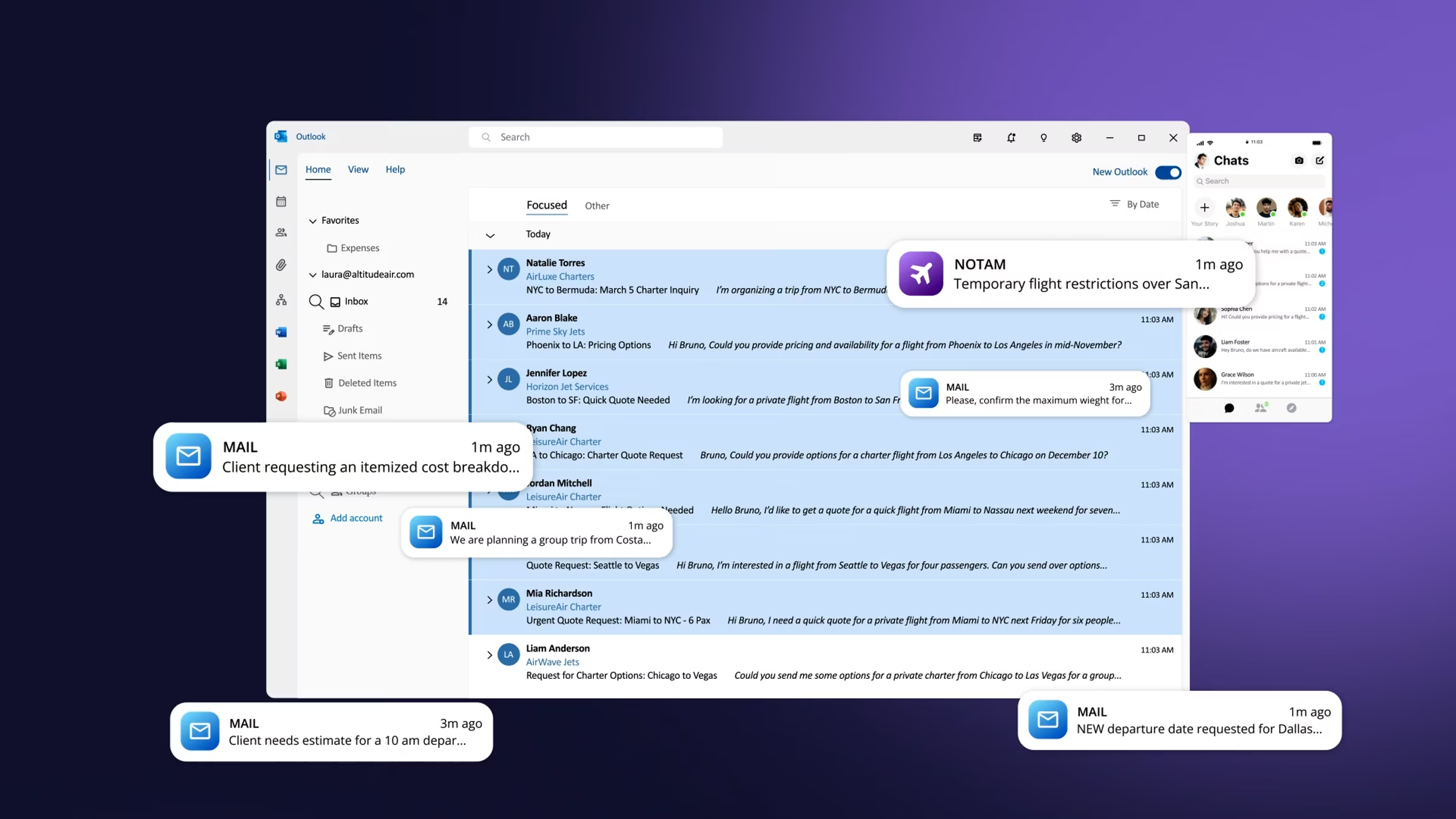
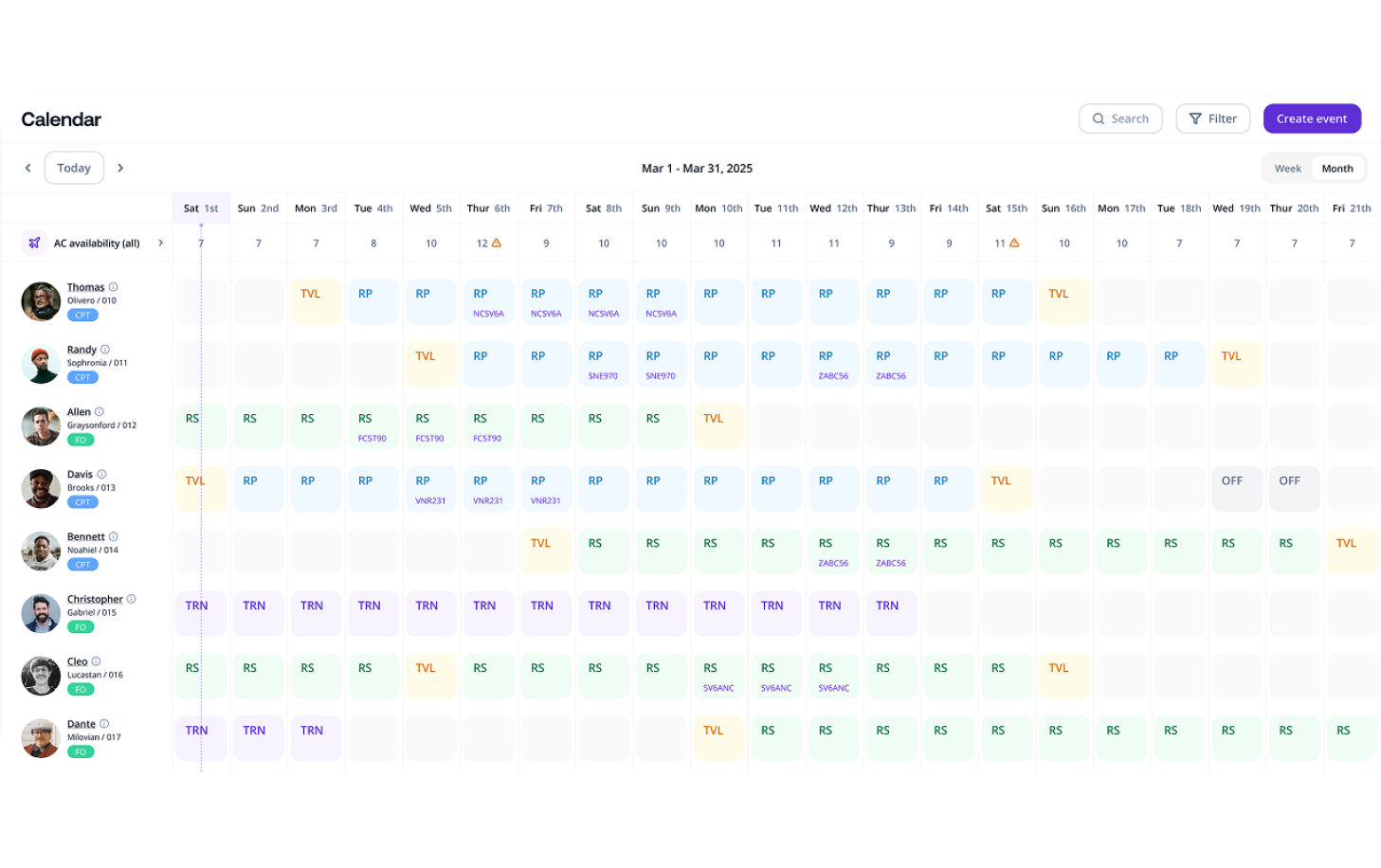
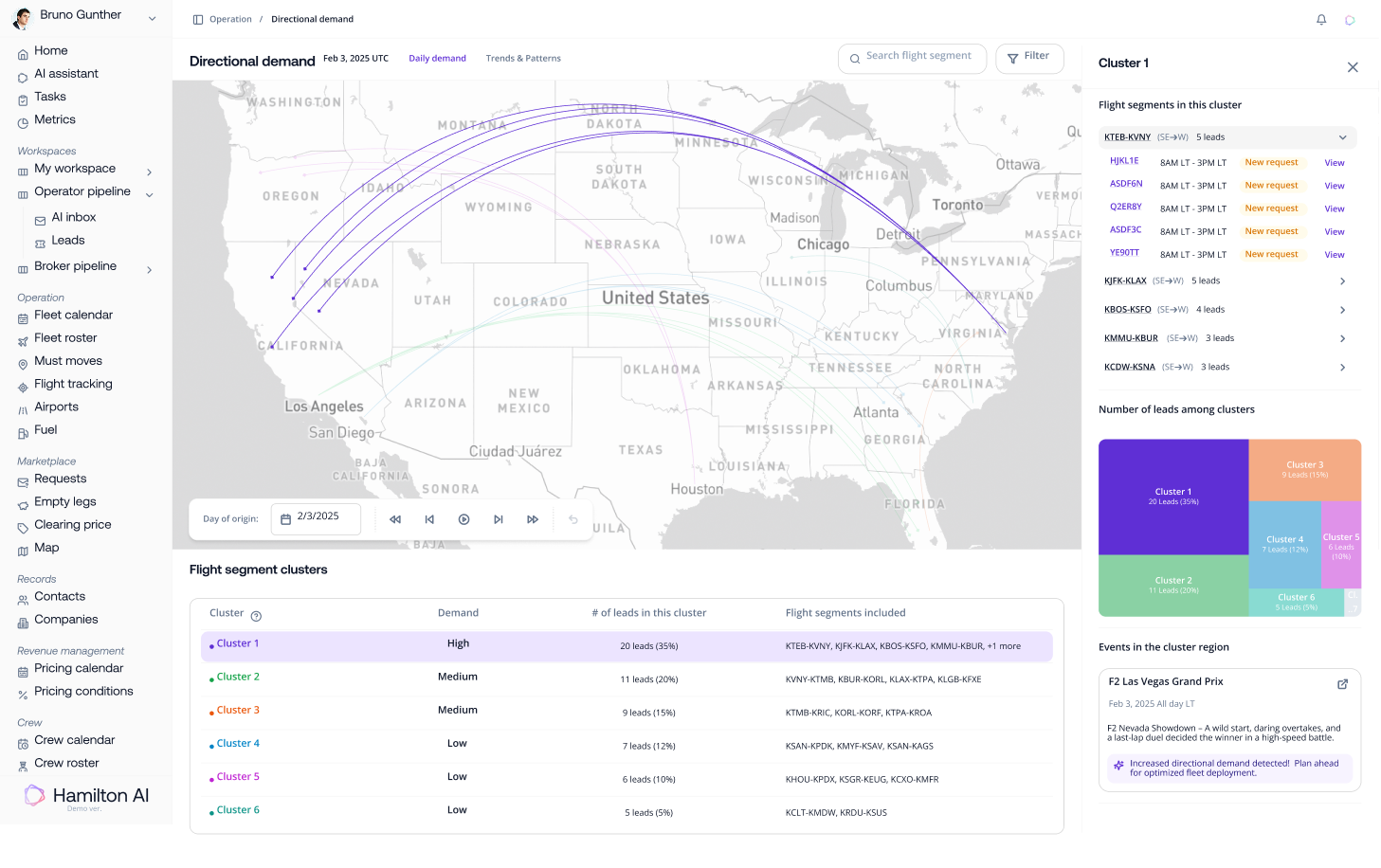
The first time someone showed us their charter workflow, we counted seven different tools open in their browser.
An Avinode tab for sourcing. Gmail for operator communication. A shared Google Sheet tracking quote status. A Word doc being reformatted into a client proposal. A Stripe link for payment. A separate system for dispatch. A WhatsApp thread for the operator confirmation.
Seven tools. One trip. And a broker who had built a career around knowing which tab to check at which point in the process.
This is not a niche problem. It's the industry standard. And it persists not because people haven't tried to solve it, but because most marketplace products stopped at the wrong place.
The industry solved the wrong half of the problem
The last decade of private aviation technology was largely devoted to discovery, making it faster and easier to find aircraft.
That problem is largely solved. Operators are connected. Inventory is visible. Availability can be checked in real time. The sourcing layer works. The problem is what happens next.
From the moment a broker finds a suitable aircraft to the moment a trip is confirmed and paid, the workflow fragments entirely. It exits the marketplace and distributes itself across email threads, PDFs, phone calls, manual data entry, and copied-and-pasted pricing that may have changed since it was first retrieved.
The average Part 135 booking involves somewhere between eight and fourteen distinct handoffs between the moment a request lands and the moment a confirmation goes out. Most of those handoffs involve a human moving information from one system to another. Each one is a point of delay. Each one is a point of error.
Discovery gave the industry visibility. What it didn't give operators and brokers was the ability to act on that visibility without leaving the platform and rebuilding the workflow from scratch somewhere else.
Why the "find and leave" model compounds cost
There's a specific failure mode that emerges when marketplaces are discovery tools and everything else is manual.
When a request comes in, someone enters it into a CRM. Then rebuilds it in a quoting tool. Then copies pricing into a proposal template. Then sends the proposal and tracks the response in email. Then re-enters the booking into a dispatch system. Then processes payment separately. Then reconciles after the fact.
The same information — client, route, aircraft, price, dates — gets typed, reformatted, or copied an average of four to six times across a single booking workflow. Every reformat is an opportunity for error. Every system switch is a delay. Every manual step is overhead that scales linearly with volume.
This is the operational reality underneath the "we're growing fast" conversations. Growth in charter means more requests, which means more manual work, which means more headcount, which means margins that don't improve the way they should as the business scales.
The economics only change when execution is part of the platform, not an afterthought that happens in spreadsheets after the marketplace does its part.
What execution inside a platform actually changes
The core insight behind Hamilton Marketplace isn't that search should be better. It's that demand should enter the system once and never need to be rebuilt.
When a request lands, whether through inbound inquiry, API, or direct entry, it becomes structured operational data immediately. Every downstream action in the workflow operates on that same record. Search runs against it. Quotes attach to it. Proposals are generated from it. Bookings reference it. Payments reconcile against it.
Nothing gets retyped. Nothing gets reformatted. The trip record at booking is the same trip record that was created when the request arrived.
This sounds obvious. It's surprisingly rare. Most workflows in charter today involve data that's been reconstructed at least twice by the time a booking is confirmed.
When data flows continuously instead of being rebuilt at each stage, three things happen. Response time compresses — brokers can send a qualified proposal in under two minutes instead of forty-five. Error rates drop because there's only one version of the data. And teams that were spending 60-70% of their time on workflow management can redirect that time toward clients and revenue.
Live pricing isn't a feature. It's a workflow transformation.
The charter quoting process has a structural inefficiency built into it: pricing is perishable, but the process of obtaining and acting on it is slow.
A broker sends a request. An operator responds, if they respond within the window. The broker reformats the quote. Sends a proposal. Waits for client approval. Goes back to the operator to confirm availability. By this point, the original pricing may no longer be valid, the aircraft may have moved, and the back-and-forth has consumed the better part of a working day.
When operators expose real-time pricing inside the workflow, the loop closes in minutes rather than hours. Pricing that's pulled at quote time is the same pricing that flows into the proposal. Availability is confirmed at the moment of booking, not after a separate phone call.
The downstream effect is material: fewer deals lost to competitors who responded faster, fewer proposals built on stale pricing, and a dramatically better client experience because the broker can give a firm answer in the same conversation rather than calling back tomorrow.
The proposal gap nobody talks about
Here's the part of the workflow that gets the least attention and costs the most time.
Between "we have a quote" and "the client has a proposal in their inbox" sits a manual process that in most brokerage operations involves copying pricing into a template, adding aircraft details, reformatting for brand standards, attaching safety certifications, and emailing a PDF.
This takes between twenty minutes and an hour per proposal, depending on the trip complexity. A broker sending ten proposals a day is spending one to two hours exclusively on document creation, work that generates no insight, creates no relationship, and adds no value beyond moving information from one format to another.
At Hamilton, quotes flow directly into proposals. Proposals are branded, structured, and complete. The broker's job is to decide which quote to send and when, not to rebuild the information in a new format.
The time saved compounds quickly. A ten-person brokerage team recovering ninety minutes per day each is recovering the equivalent of roughly a full-time headcount per month. That's either cost reduction or capacity redeployed toward clients.
Execution doesn't happen outside the platform anymore
The moment that defines whether a marketplace is a discovery tool or an execution platform is the booking confirmation.
In traditional workflows, confirmation involves an email chain, a phone call, a manually processed payment, and an offline acknowledgement that eventually makes its way back into some system of record, probably the next day.
In Hamilton, proposal delivery, contract acceptance, booking validation, payment processing, and confirmation status are all part of the same workflow. When a client accepts a proposal, the booking is created. When payment clears, dispatch is notified. When the trip is confirmed, the financial record is already reconciled.
There's no moment where the deal "leaves" the platform. There's no offline step that needs to be reconstructed later. The audit trail is complete because the process was complete.
For operators, this changes how they relate to brokers. Instead of managing a relationship through email and hoping information gets passed accurately, they have a shared operational record that both parties can see.
For brokers, it changes how they scale. The bottleneck in most brokerage growth isn't demand, it's the operational bandwidth to handle more trips without proportionally more people. When execution is automated and connected, that bottleneck moves.
What we're actually building
Hamilton Marketplace is not a better sourcing tool. There are already good sourcing tools.
It's the first end-to-end commercial workflow for charter, from inbound demand to confirmed, paid, dispatched trip, built as a single connected system.
The companies that will define the next decade of private aviation won't be the ones with the biggest aircraft database. They'll be the ones that can turn a request into revenue fastest, with the least overhead, at the highest margin.
That's the problem we're solving.
Hamilton AI is a full-stack platform for private charter operations, quoting, dispatch, banking, and compliance in one system. Built for Part 135 and Part 91 operators running 5 to 60+ aircraft.