Every serious operator we talk to has the same story.
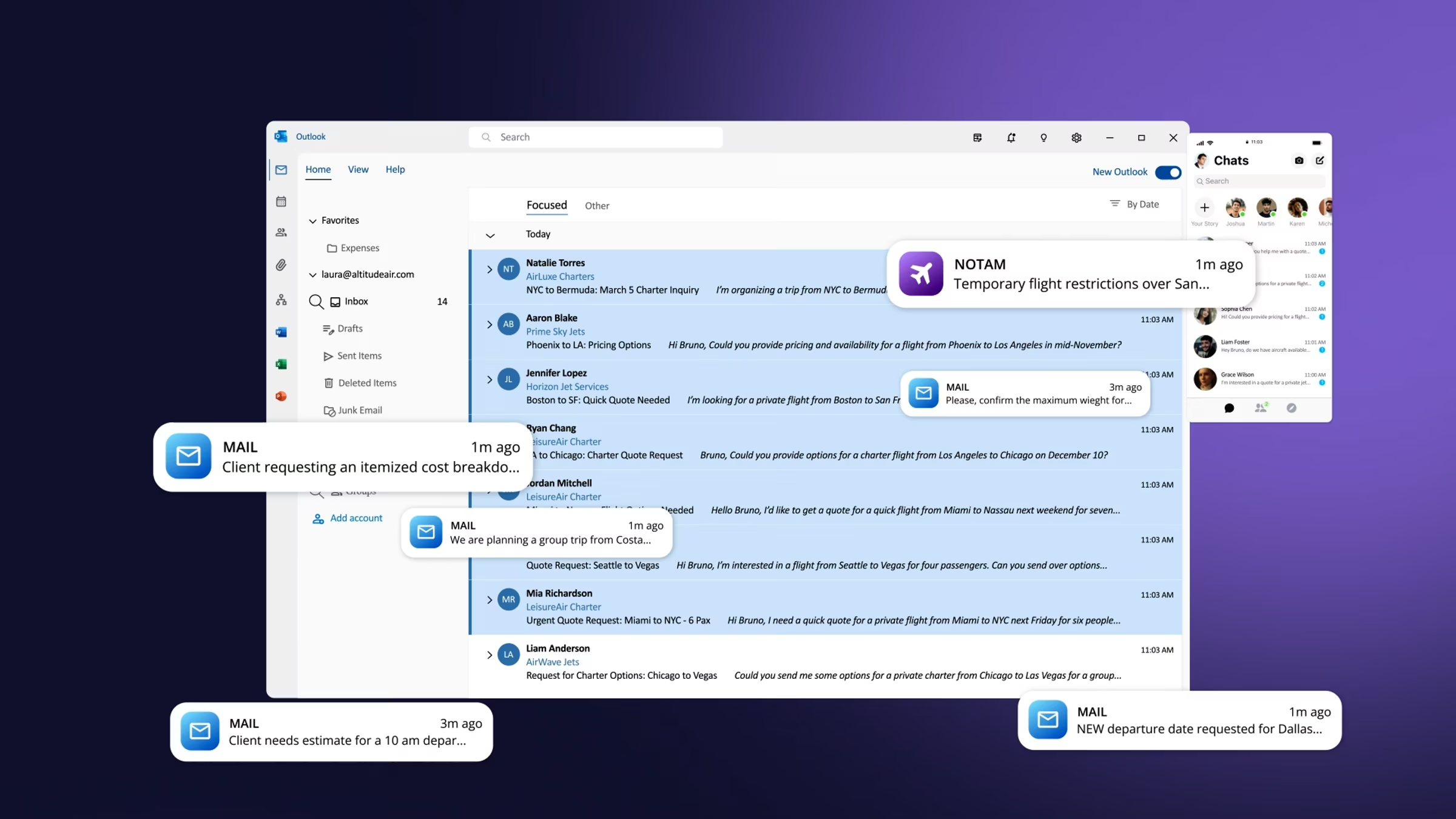
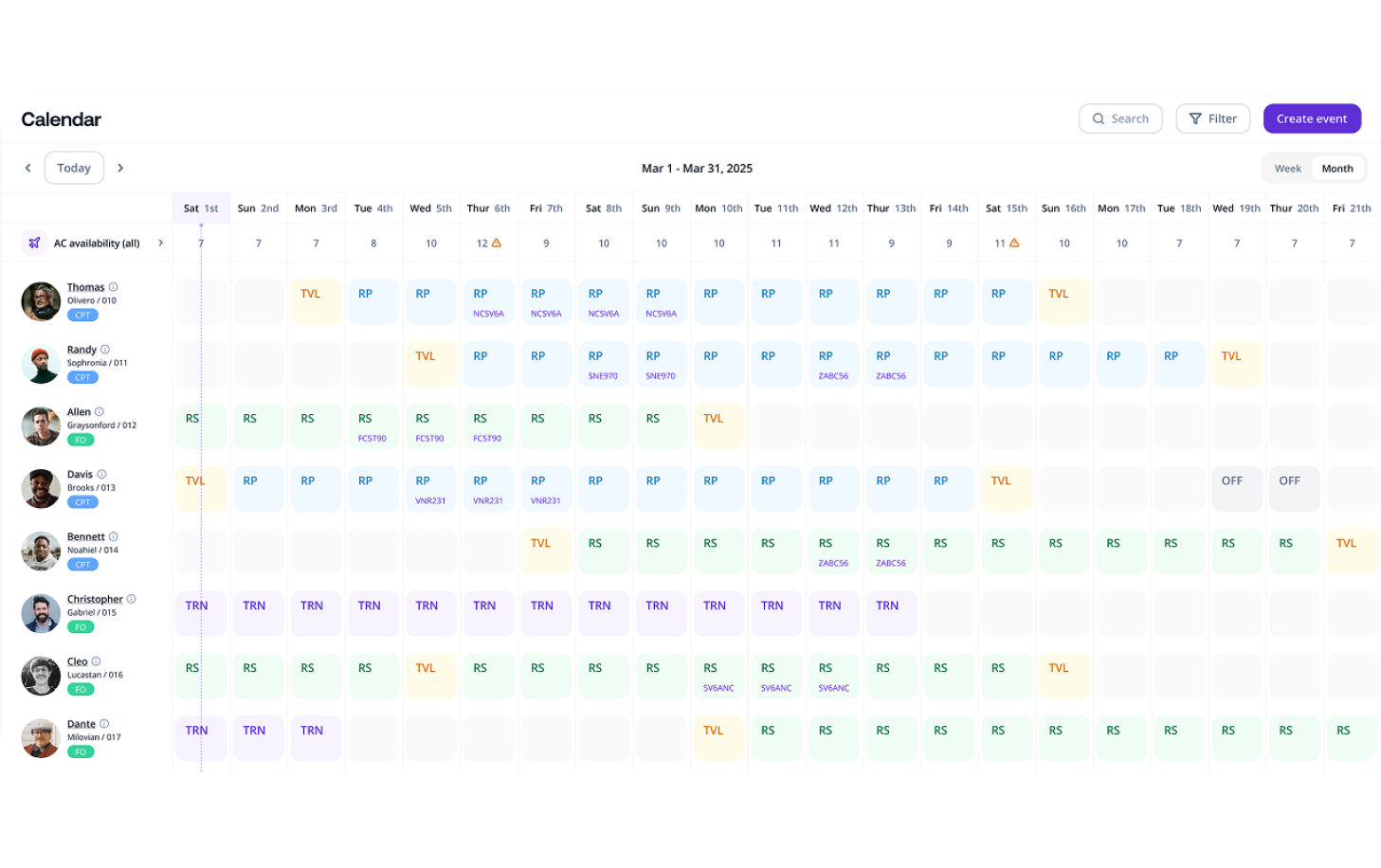
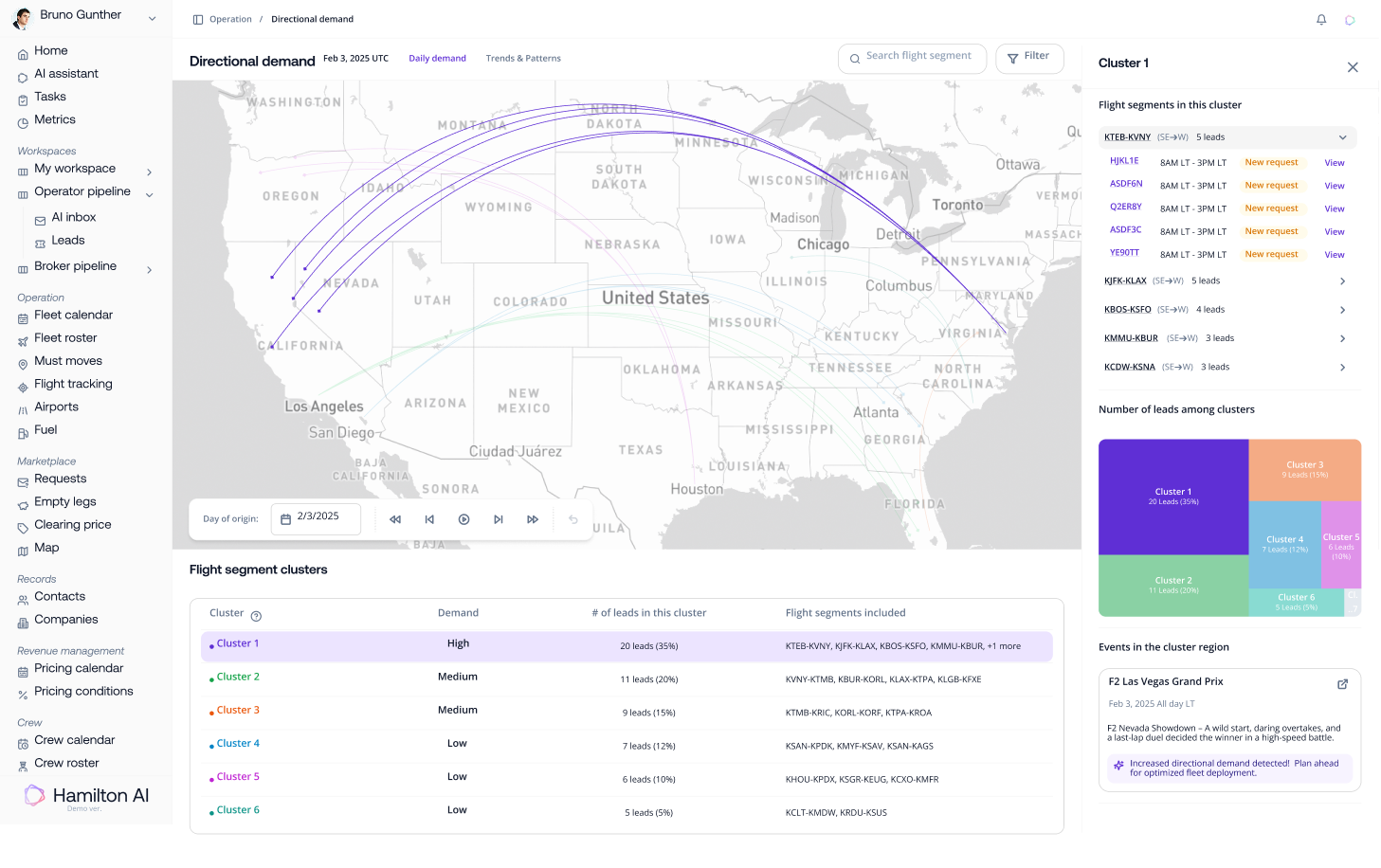
They've invested in technology. Booking software, fleet management, scheduling tools, trip management systems. Their operational data is cleaner than it's ever been. They can see aircraft availability in real time. Quotes go out in minutes.
And then someone asks finance how much revenue a specific broker generated last quarter, and the answer involves exporting things to Excel.
Or a wire arrives and it takes thirty minutes to figure out which trip it belongs to.
Or month-end closes take three days instead of one because reconciliation still means a human matching transactions to flights, line by line.
This is the gap. It's not dramatic. It doesn't show up in pitch decks or feature comparisons. But it costs real money, and it compounds as you scale.
The industry got the wrong diagnosis
For years, the conversation in charter finance has been about payment speed. How fast can a wire clear? Can we accept cards? Can we move funds outside banking hours?
These are real problems. But they're the symptom, not the disease.
The actual problem is that financial data and operational data live in separate systems with no connection between them. A payment arrives. Operations knows about the trip. Finance knows about the payment. Nobody has a system that automatically knows both, connects them, and acts on the relationship.
So the work gets done manually. Every time.
This is not a payments problem. It's an infrastructure problem. And the distinction matters because you can't fix an infrastructure problem with a faster payment tool.
What "financial infrastructure" actually means in practice
When we say financial infrastructure, we mean something specific.
It means that when a booking is confirmed, a sub-account exists for that trip before the first payment arrives. It means that when the payment lands, it's automatically matched, not just to a transaction record, but to the crew costs, FBO fees, positioning legs, and handling charges associated with that flight. It means that when a trip changse, leg added, aircraft swapped, departure time shifted, the financial picture updates automatically rather than sitting in a queue for someone to reconcile next week.
It means that the question shifts from "has the payment cleared?" to "what is the margin on this trip, right now, including all confirmed costs?"
That shift sounds incremental. It isn't. It's the difference between running a business reactively and running it with actual visibility.
The hidden cost no one is measuring
Here's a number worth thinking about: the average Part 135 operator with a 15-aircraft fleet processes somewhere between 800 and 1,200 transactions per month across bookings, deposits, final payments, vendor invoices, FBO charges, and crew expenses.
Reconciling those manually, even with good tooling, takes real headcount. Three to five hours per day, conservatively, across finance and ops staff. That's a full-time role, or close to it, dedicated almost entirely to keeping two systems in sync.
The cost isn't just the time. It's the error rate. It's the decisions made on stale data. It's the month-end scramble that delays reporting and makes CFOs anxious. It's the audit trail that exists in someone's inbox rather than the system.
When reconciliation is automatic, when every transaction is connected to operational data at the moment it occurs, that cost disappears. The headcount gets redirected. The data is always current. Month-end is no longer an event.
Why compliance is the quiet forcing function
There's a regulatory dimension to this that most fintech conversations in aviation skip over.
ITIC, the aviation indemnity insurer, reported a measurable increase in claims tied to grey charter operations in 2025. Regulators are paying closer attention to how money moves in Part 135. The expectation that operators can produce complete, auditable transaction records on demand is not a future requirement. It's a current one.
Manual reconciliation systems are structurally incapable of meeting this standard at scale. Not because the people running them aren't diligent, they usually are, but because the data simply isn't organised in a way that produces a clean audit trail without significant reconstruction effort.
Financial infrastructure that's compliance-first from the ground up, with real AML screening, proper KYC/KYB onboarding, PEP and watchlist checks on every transaction, isn't a nice-to-have feature. For operators growing past a certain transaction volume, it's becoming a requirement.
What we built and why we built it this way
Hamilton Banking is built on Column, a regulated, named Banking-as-a-Service provider with full licensing. We're explicit about this because the alternative, an unnamed "FDIC-insured partner bank", is how most aviation fintech products describe their banking layer, and it tells you almost nothing about the regulatory foundation underneath.
Every transaction runs through Hawk AI for real-time AML screening. KYB is structured across six steps with beneficial owner verification and ongoing risk scoring. Transfer rails cover ACH, wire, SWIFT/IBAN, real-time, and book transfers, because operators and brokers work internationally, and assuming all payments are domestic wires is a North American product assumption that doesn't hold in practice.
More importantly: banking lives inside the trip lifecycle, not alongside it. When an invoice arrives by email, our system extracts and maps it automatically. When a trip changes, financial records update. Reconciliation runs against operational data, not just against payment objects.
The result is that finance and operations work from the same source of truth, in real time, without manual synchronisation.
The question operators should be asking
Most technology evaluations in aviation focus on what a system does.
The more useful question is what a system makes possible.
A standalone payment tool makes it possible to receive money faster.
Integrated financial infrastructure makes it possible to know, at any point in time, the profitability of every customer, broker, route, and aircraft in your fleet without exporting anything, without waiting for month-end, without asking someone to pull the numbers together.
That's not a marginal improvement on the status quo.
That's a different way of running the business.
Hamilton AI is a full-stack platform for private charter operations, quoting, dispatch, banking, and compliance in one system. Built for Part 135 and Part 91 operators running 5 to 60+ aircraft.