Today, we’re announcing that we’ve raised a $7.5 million seed round to accelerate our mission of building the execution layer for private aviation.
This round was led by TTV Capital, with participation from Bling Capital, Cambrian Ventures, FJ Labs, Weekend Fund, Mintaka Ventures, Correlation VC, and HF0.
With this funding, we’re doubling down on what we believe the industry urgently needs: a system that doesn’t just organise information, but executes. A platform that turns fragmented inputs into structured action, automates core workflows, and enables operators to move from request to booking with speed, accuracy, and control.
Private aviation is a $60B market. Yet, behind the scenes, much of it still runs on emails, spreadsheets, PDFs, and manual coordination.
Private aviation has an execution problem
The biggest problem in private aviation is not lack of demand. It’s what happens after demand comes in.
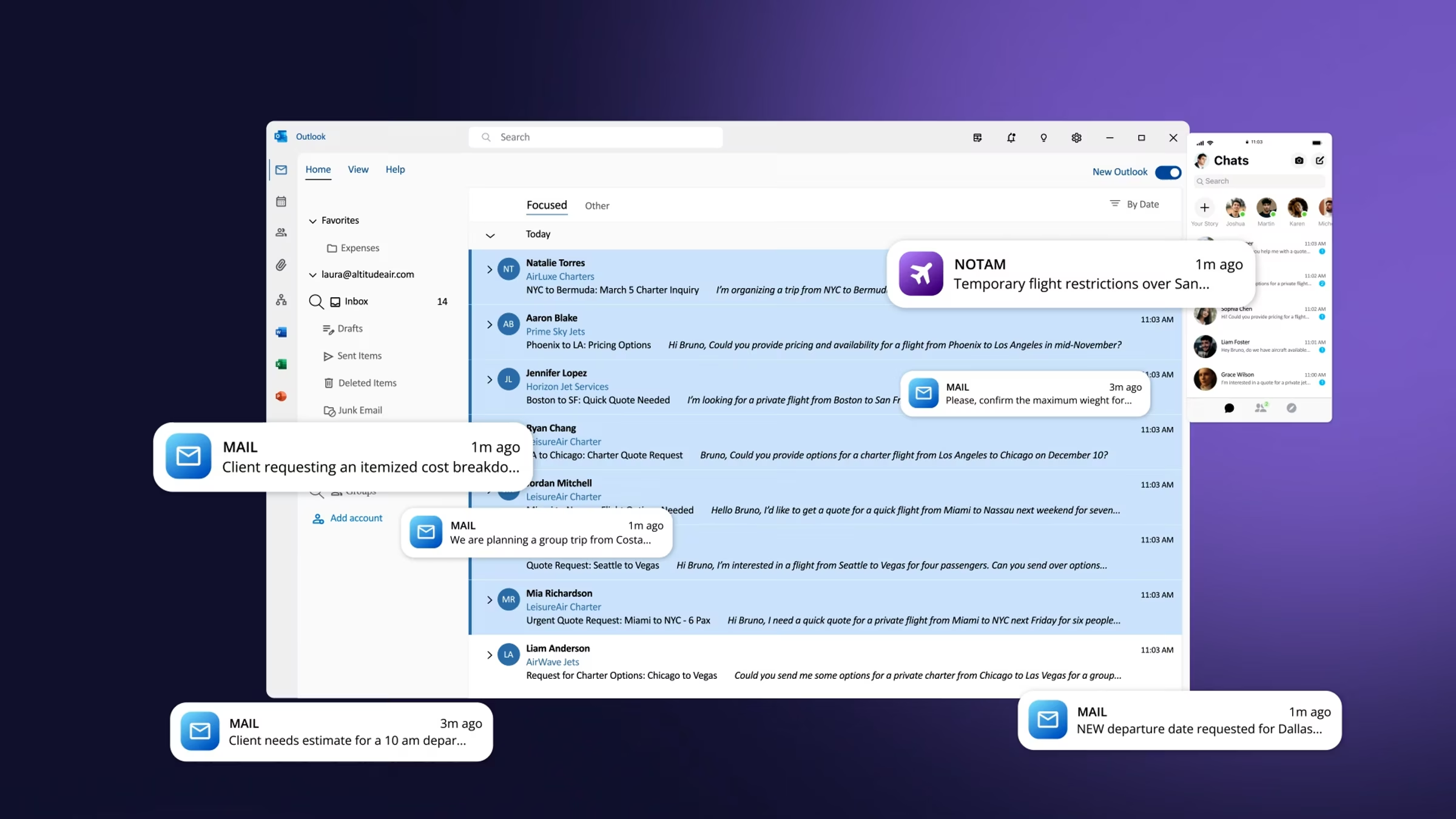
Every day, operators receive a constant flow of trip requests, emails, documents, pricing inputs, and operational updates. The volume is high, the stakes are high, and the workflows are still largely manual.
That creates friction everywhere.
Quotes take too long to produce. Pricing decisions depend on incomplete information. Sales teams spend hours working on requests that never convert. Operations teams are stuck managing fragmented data across too many systems. And when everything depends on people manually moving information from one place to another, scale becomes difficult.
This is the reality Hamilton AI was built for.
We’ve seen it firsthand with operators across the U.S. running complex fleets and high-throughput commercial operations. The pattern is always the same: strong demand, capable teams, but too much manual execution sitting in the middle.
One operator went from generating roughly 400 quotes per day with a full sales team to more than 1,200 quotes daily without adding headcount. The team didn’t get smaller. They simply spent less time processing and more time closing.
Built for end-to-end execution
Most software in this category is built to organise work, not execute it.
It stores records. It tracks activity. It creates visibility. But it still leaves the hard part to the team.
Hamilton AI is built differently.
At the core of the platform is a deterministic system that ingests unstructured aviation inputs, including emails, PDFs, operational documents, and maintenance records, and converts them into structured, auditable action.
That foundation allows operators to automate the workflows that actually drive the business:
- quote generation
- dynamic pricing
- pipeline management
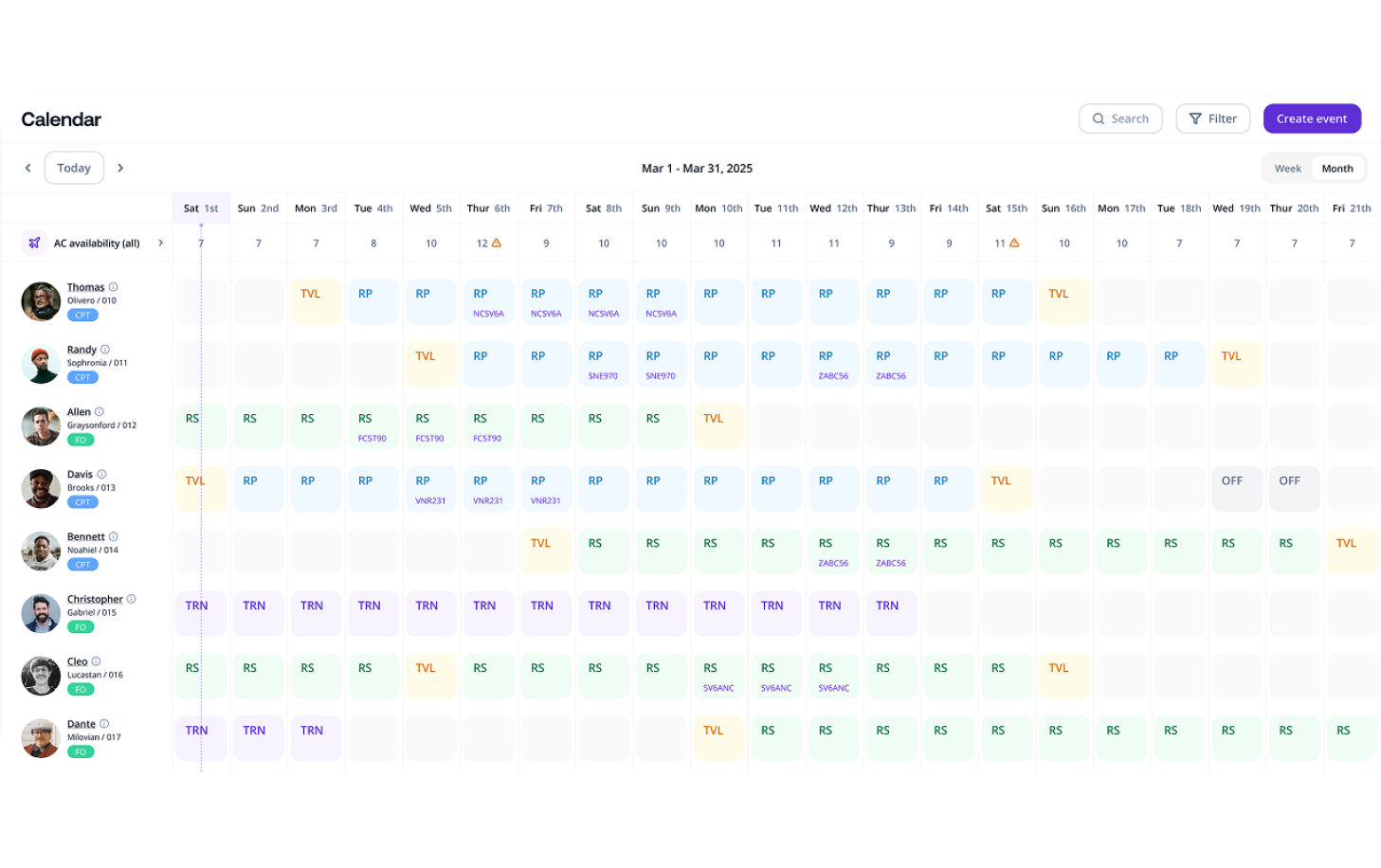
- dispatch-adjacent coordination
- payment reconciliation
This matters because private aviation is not a category where vague outputs are acceptable. The work is too operationally sensitive and too commercially important.
Hamilton is designed to produce outputs that are consistent, traceable, and verifiable. Not helpful suggestions. Not black-box guesses. Action that can actually be used.
The old stack is breaking
Private aviation has been underserved by technology for a long time.
Many operators are still running critical parts of the business across fragmented systems that were never designed to work together. One tool for quoting. Another for CRM. Another for scheduling. Another spreadsheet for follow-up. Another inbox full of information that never makes it into the system properly.
The result is not just inefficiency. It’s lost revenue.
The industry’s quote-to-book ratio sits between 2% and 4%, which means sales teams spend an enormous amount of time handling work that leads nowhere. When the flow of inbound demand is messy and manual, even strong teams lose time on the wrong opportunities.
Hamilton AI changes that by creating structure where there was fragmentation before.
We ingest inbound requests from multiple channels, standardise the data, identify what matters, and support the workflows required to act on it. The goal is simple: help teams spend less time sorting and more time executing.
Not by replacing people, but by removing the manual work that slows them down.
What we’re building
We started Hamilton AI to solve a very specific problem: too much value in private aviation is still trapped inside manual workflows.
The opportunity is not to build another piece of software for teams to update. It is to build infrastructure that can read, decide, and execute across the workflows that matter most.
That means continuing to invest in the core capabilities behind the platform:
- deeper data pipelines across fragmented demand sources
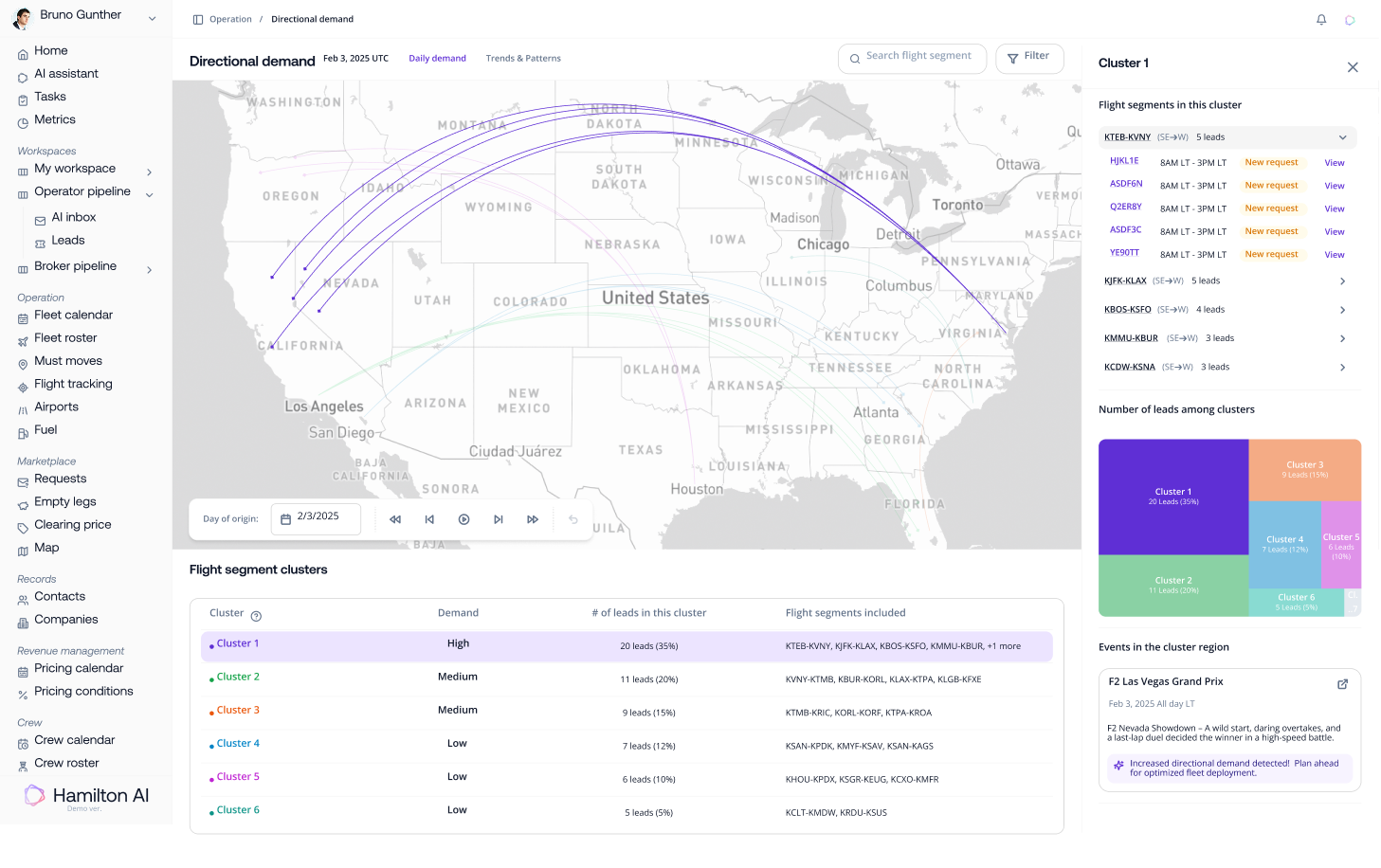
- stronger pricing and optimisation logic
- faster and more reliable workflow execution
- more connected financial infrastructure through payments and reconciliation
- auditable systems that operators can trust in high-stakes environments
This is the work that matters if you want to modernise private aviation in a serious way.
What comes next
This funding gives us the ability to move faster on both product and deployment.
We’re expanding engineering, investing further in our data and execution infrastructure, and continuing to build alongside operators who are dealing with this complexity every day.
Since founding Hamilton AI in 2024, we’ve worked closely with customers including Baker Aviation, Craft Aviation, and Jetvia. These are teams operating in demanding, real-world environments, and their input has helped shape the platform from the beginning.
Our team brings together experience from companies including Dropbox, Square, Walt Disney, PagerDuty, and Airlabs. We also participated in HF0’s residency program for repeat founders, where we compressed a year’s worth of product development into 90 days.
Building the infrastructure this industry deserves
Wouter Witvoet, our founder and CEO at Hamilton AI, has spent his career building infrastructure for high-value, time-sensitive transactions.
Private aviation has the same underlying problem we saw in other complex markets: too much value depends on manual processes, disconnected systems, and operational work that should already be automated.
Hamilton AI exists to change that.
We believe private aviation needs more than better visibility. It needs better execution.
When inbound demand is structured properly, when workflows can run automatically, and when teams can trust the outputs, the whole business changes. Response times improve. Throughput increases. Teams operate with more leverage. Revenue opportunities that used to be missed become actionable.
That is the infrastructure we’re building.
And we’re only getting started.